What does your SLT need to see?
Not more data. A handful of numbers, compared fairly, split the way governors and inspectors will ask about them, and a way to see whether anything is being done.
Most senior leaders aren’t short of data. They’re short of the right few numbers, in a form they can trust and act on in the time they have.
When we designed the SLT page in EarlySight, we started with one question: what does a head or deputy actually need to see each week? Here’s where we landed.
A handful of headlines, not a hundred
Five or six numbers cover most of what a senior team is asked about: attendance, persistent absence, suspensions, attainment and behaviour. Everything else can sit one click down.
Each headline earns its place by being one someone will ask about, whether that’s a governor, the trust or an inspector.
The same point last year
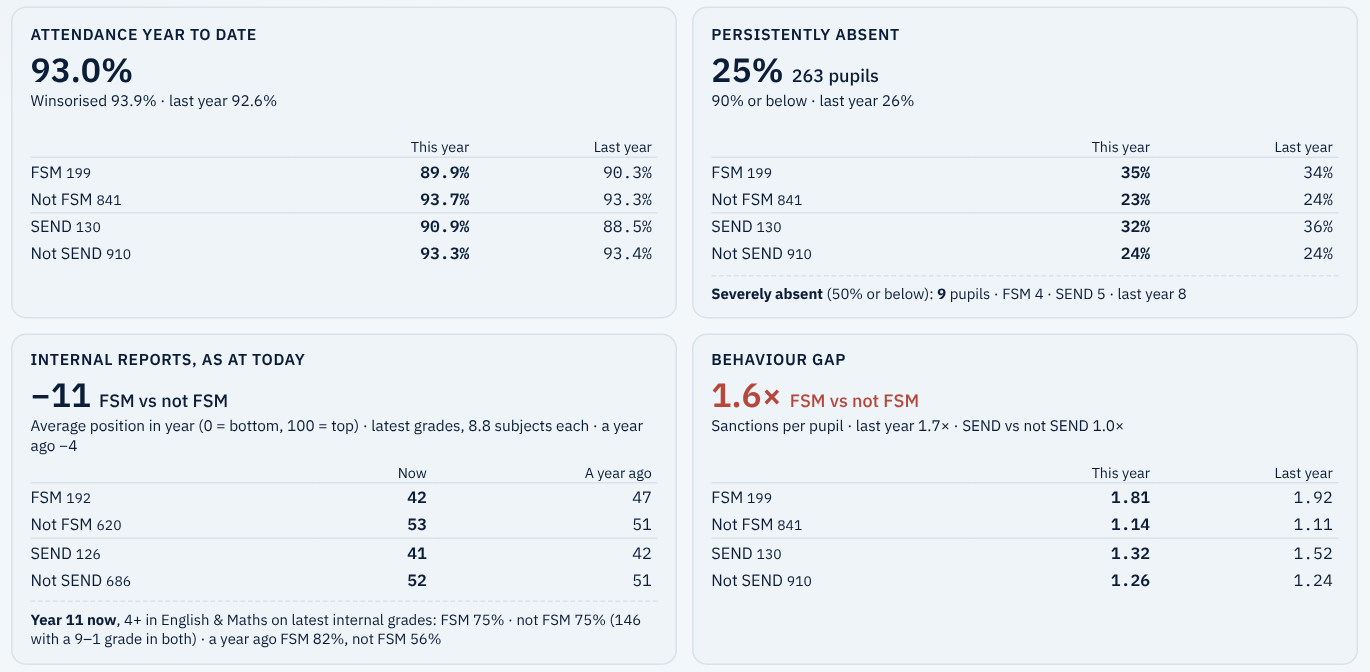
A figure on its own invites the question “is that good?”. The fair comparison is the same point last year, counted in school days, because term dates move and a calendar date doesn’t line up.
Comparing October with last July makes this year look worse than it is. Comparing it with last October tells you whether something has changed.
The gaps, not just the averages
A whole-school average can improve while a gap widens. So every headline is split the way the DfE reports it: free school meals against not, SEND against not, this year against last.
Reading along one group’s row shows where it falls behind. Is it attendance, behaviour or attainment, or all three? That points to very different responses.
Year groups side by side
The next question is always “where?”. Putting each year group’s attendance, persistent absence and behaviour side by side shows where to send attention, and whether a figure belongs to a whole year or to a few pupils in it.
That’s why we show each average twice: as it is, and with the extremes pulled in. When the two disagree, the problem belongs to a handful of pupils rather than the year.
Whether anything is being done
Seeing a problem isn’t the same as acting on it. SLT need to know that the concerns raised are being looked at.
In EarlySight, staff mark a concern as considered, with a short note. The summary on the SLT page counts how many have been, without naming any pupil.
What SLT don’t need
Every pupil’s name. Pupil-level detail belongs with the year leaders and form tutors who can act on it, and EarlySight gives each of them their own view. SLT need to know the system is working, not to do everyone’s list for them.
A summary for governors
The DfE’s attendance guidance expects governors and trusts to look at recent and historic trends. EarlySight writes a short summary from the same figures, with no pupil named, ready to paste into a governors’ report.