Blog
Spot the change, not just the number
Short, practical pieces on attendance, behaviour and grades: what the numbers hide, and how to see the change while it's still small.
-
Predicted a 6. Heading for a 4.
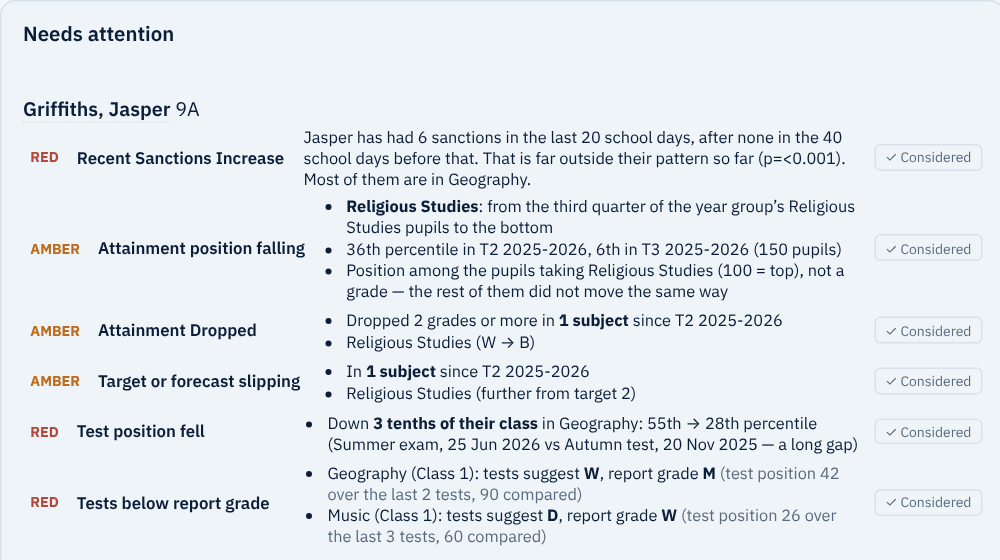
Predicted grades are set once and pupils keep moving. Nobody can watch thousands of them by hand. Reports help, and tests between reports show the slip much earlier.
-
Will EarlySight work with my school?
Every school has its own words, its own week, its own groups and its own idea of when a pupil needs a look. EarlySight is set up around yours, not the other way round.
-
Missing kit, or missing money?
A sanction for no PE kit looks the same whether a pupil forgot it or their family couldn't afford it. Here's how to tell the difference in your own data.
-
What do form tutors need to see?
A form tutor has a few minutes and thirty pupils. They need a short list, a reason with every name, and the good news given the same space as the bad.
-
What does your SLT need to see?
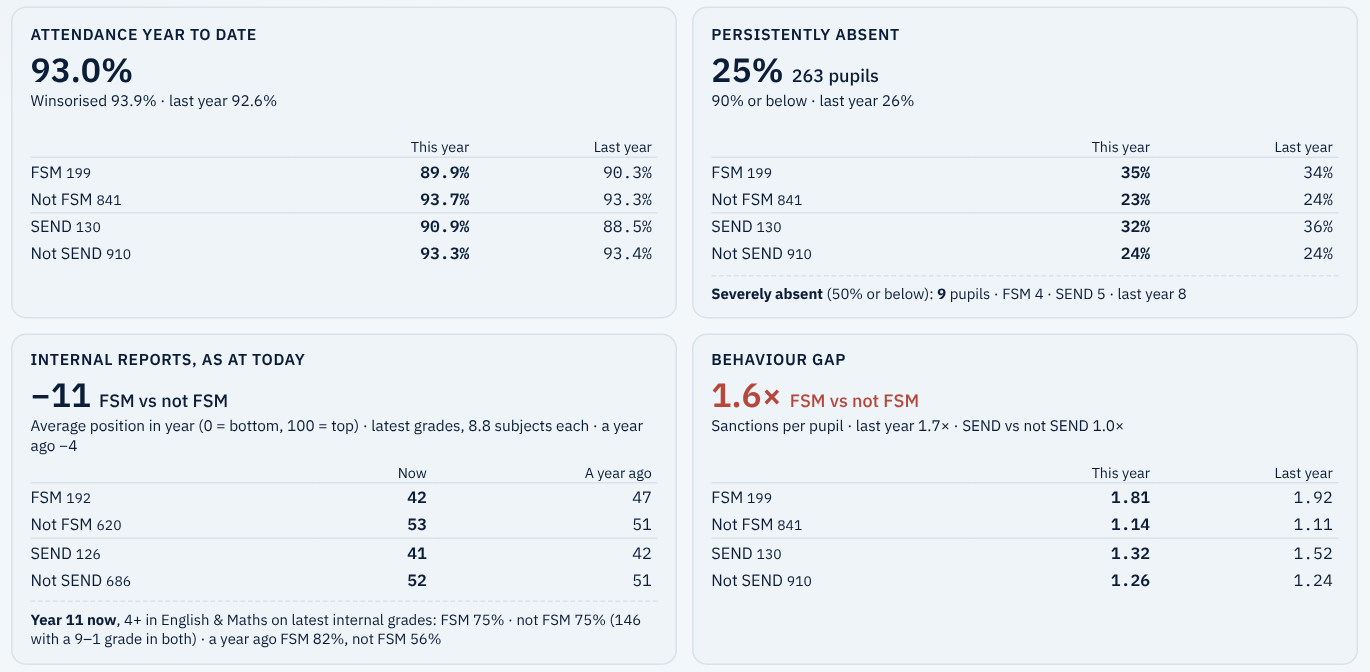
Not more data. A handful of numbers, compared fairly, split the way governors and inspectors will ask about them, and a way to see whether anything is being done.
-
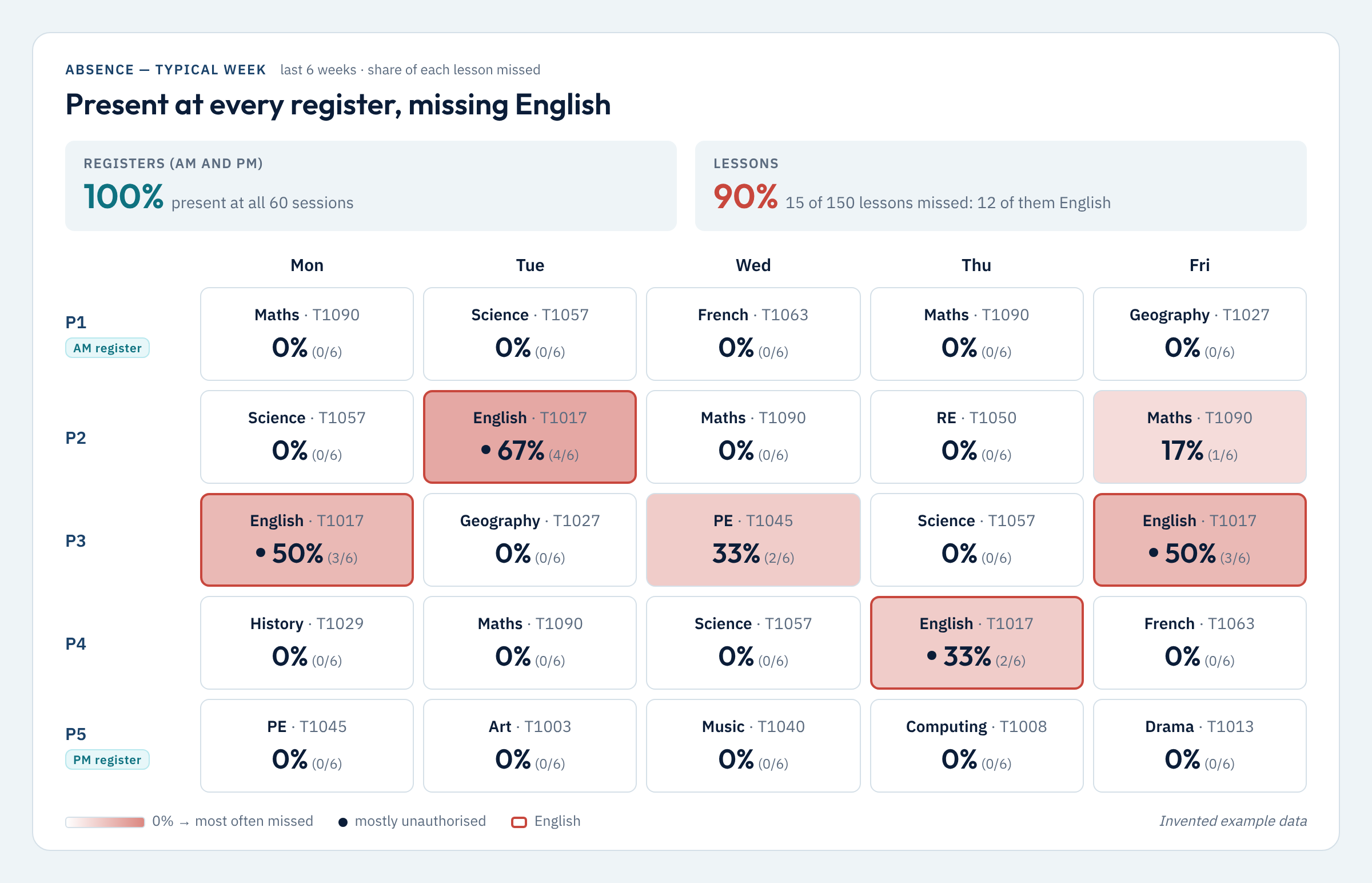
Marked present. Missing English.
A pupil can be at every register and still skip lessons twice a week. The attendance figure won't show it. Here's how to find them in your own data.
-
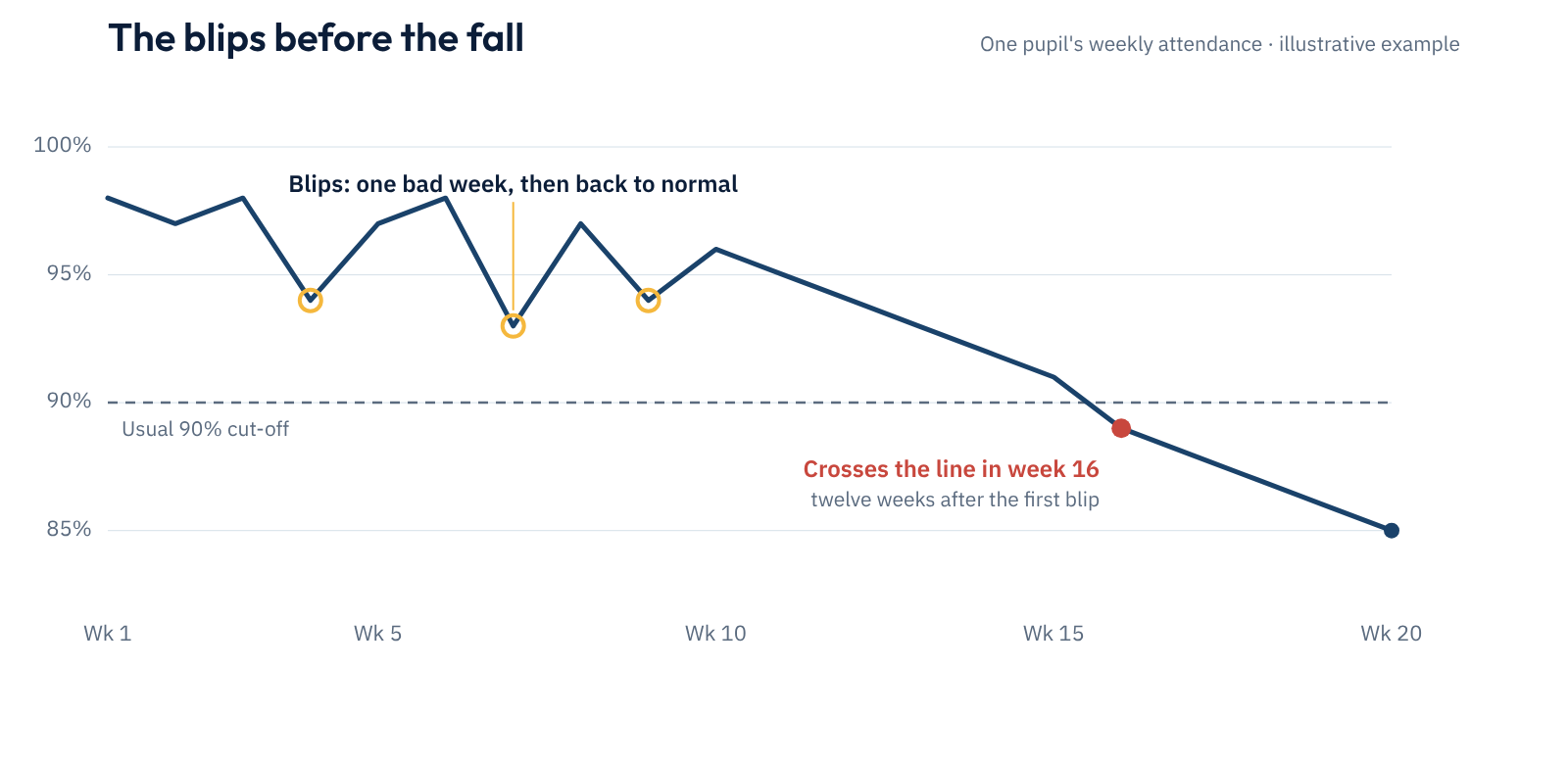
The blips before the fall: why we started EarlySight
In business data, decline rarely comes out of nowhere. We wanted to know whether the same was true of pupils.
-
Did it work, or did they leave?
You funded an attendance push for disadvantaged pupils and the figure went up. Before it goes in your pupil premium review, check it was the pupils who changed, not just the list of names.
-
Is a class performing well or performing badly? How EarlySight draws the distinction.
The top class in a year may actually be under-performing hugely...and the worst class in the year may be performing fantastically. EarlySight lets SLT draw a distinction and identify that gap. How do we achieve that? We look at who is in the room before we calculate anything.